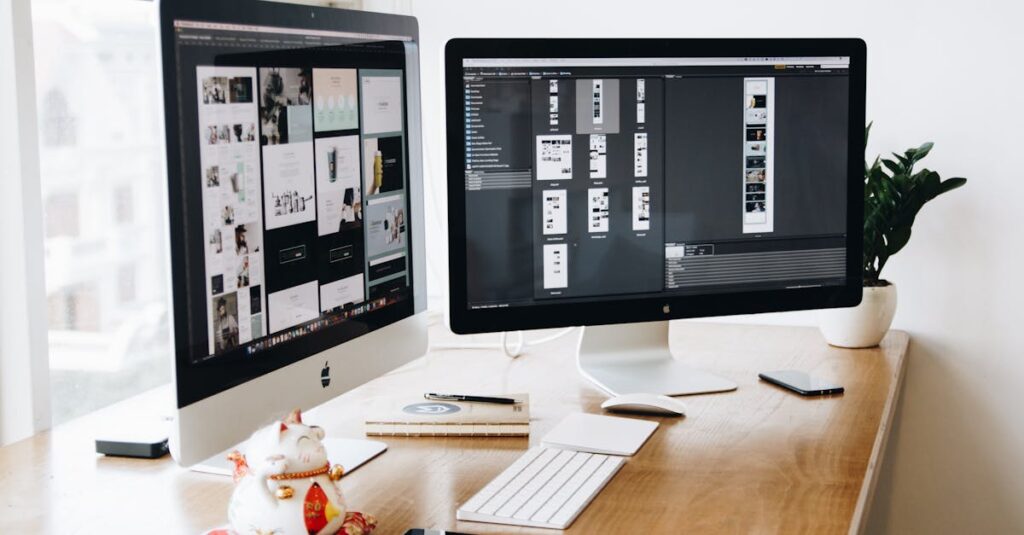
That’s a great pivot! Let’s combine graphic design and website building into a fun, practical, and slightly contrarian blog post idea about embracing imperfection in the age of polished templates.
🗑️ The Joy of the Digital Mess: Why Imperfect Layouts Win User Attention, the pwerful graphic design.
🤖 The Template Trap- powerful website
In 2025, website building is too easy. Seriously! With tools like Wix, Squarespace, and modern WordPress themes, every site looks perfectly polished, grid-aligned, and mobile-optimized right out of the box.
The problem? Everything looks the same.
When every personal portfolio, small business site, and niche blog uses the same clean, minimalist, two-column layout, users suffer from “template fatigue.” They scroll past without registering anything because the design lacks visual friction—that little nudge that makes the brain stop and pay attention.
🎨 Why ‘Wabi-Sabi’ Design Works
The solution isn’t bad design; it’s intentional imperfection.
Think about the Japanese aesthetic of Wabi-Sabi: finding beauty in imperfection, incompleteness, and transience. Applied to web design, this means embracing elements that break the grid just a little:
- The Tilted Image: Instead of perfectly centered, rotate a key photo or illustration by a subtle $1.5^\circ$ or $2^\circ$. It instantly gives the feeling of human curation rather than robotic automation.
- The Hand-Drawn Arrow: Use a simple, slightly shaky hand-drawn element (like an arrow or a circle) instead of a slick, vector icon to point to a call-to-action. It feels friendly and authentic.
- The Text Overlap: Purposefully allow text blocks to slightly overlap background images or other elements. This creates a sense of depth and visual tension, compelling the eye to focus.
🖼️ Case Study: The Post-Modern Portfolio
Imagine a graphic designer’s portfolio built on the principle of the “Digital Mess.”
| Perfect Template Approach | Intentional Imperfection Approach |
| Grid: Strict 12-column alignment. | Grid: Asymmetrical layout; some sections use 3 columns, others use 7. |
| Typography: Single, clean sans-serif font. | Typography: A combination of a sharp serif for headlines and a monospace font for body text. |
| Images: Perfectly cropped squares/rectangles. | Images: Jagged, tear-away edges on project thumbnails; some placed slightly off-center. |
The “Messy” portfolio feels like a collage—it suggests that a creative mind is actively arranging things, not just filling in placeholders. It makes the designer seem more human and, paradoxically, more skilled.
🛑 A Word of Warning: It’s Controlled Chaos
The goal is to create intentional friction, not outright confusion. Your design must remain functional:
- Readability is King: The text must always be clear, high-contrast, and easy to read.
- Navigation is Sacred: The menu and core links must be intuitive and stay in expected locations (top/side).
- Performance Matters: Messy visuals shouldn’t mean slow loading times. Keep file sizes optimized!
In a sea of perfectly aligned, homogeneous websites, the digital mess is your secret weapon. It’s the visual stutter that makes the user stop scrolling and realize: “Wait, something interesting is happening here.”
That’s a great pivot! Let’s combine graphic design and website building into a fun, practical, and slightly contrarian blog post idea about embracing imperfection in the age of polished templates.
🗑️ The Joy of the Digital Mess: Why Imperfect Layouts Win User Attention
🤖 The Template Trap
In 2025, website building is too easy. Seriously! With tools like Wix, Squarespace, and modern WordPress themes, every site looks perfectly polished, grid-aligned, and mobile-optimized right out of the box.
The problem? Everything looks the same.
When every personal portfolio, small business site, and niche blog uses the same clean, minimalist, two-column layout, users suffer from “template fatigue.” They scroll past without registering anything because the design lacks visual friction—that little nudge that makes the brain stop and pay attention.
🎨 Why ‘Wabi-Sabi’ Design Works
The solution isn’t bad design; it’s intentional imperfection.
Think about the Japanese aesthetic of Wabi-Sabi: finding beauty in imperfection, incompleteness, and transience. Applied to web design, this means embracing elements that break the grid just a little:
- The Tilted Image: Instead of perfectly centered, rotate a key photo or illustration by a subtle $1.5^\circ$ or $2^\circ$. It instantly gives the feeling of human curation rather than robotic automation.
- The Hand-Drawn Arrow: Use a simple, slightly shaky hand-drawn element (like an arrow or a circle) instead of a slick, vector icon to point to a call-to-action. It feels friendly and authentic.
- The Text Overlap: Purposefully allow text blocks to slightly overlap background images or other elements. This creates a sense of depth and visual tension, compelling the eye to focus.
🖼️ Case Study: The Post-Modern Portfolio
Imagine a graphic designer’s portfolio built on the principle of the “Digital Mess.”
| Perfect Template Approach | Intentional Imperfection Approach |
| Grid: Strict 12-column alignment. | Grid: Asymmetrical layout; some sections use 3 columns, others use 7. |
| Typography: Single, clean sans-serif font. | Typography: A combination of a sharp serif for headlines and a monospace font for body text. |
| Images: Perfectly cropped squares/rectangles. | Images: Jagged, tear-away edges on project thumbnails; some placed slightly off-center. |
The “Messy” portfolio feels like a collage—it suggests that a creative mind is actively arranging things, not just filling in placeholders. It makes the designer seem more human and, paradoxically, more skilled.
🛑 A Word of Warning: It’s Controlled Chaos- Powerful
The goal is to create intentional friction, not outright confusion. Your design must remain functional:
- Readability is King: The text must always be clear, high-contrast, and easy to read.
- Navigation is Sacred: The menu and core links must be intuitive and stay in expected locations (top/side).
- Performance Matters: Messy visuals shouldn’t mean slow loading times. Keep file sizes optimized!
In a sea of perfectly aligned, homogeneous websites, the digital mess is your secret weapon. It’s the visual stutter that makes the user stop scrolling and realize: “Wait, something interesting is happening here.”
That’s a great pivot! Let’s combine graphic design and website building into a fun, practical, and slightly contrarian blog post idea about embracing imperfection in the age of polished templates.
🗑️ The Joy of the Digital Mess: Why Imperfect Layouts Win User Attention
🤖 The Template Trap
In 2025, website building is too easy. Seriously! With tools like Wix, Squarespace, and modern WordPress themes, every site looks perfectly polished, grid-aligned, and mobile-optimized right out of the box.
The problem? Everything looks the same.
When every personal portfolio, small business site, and niche blog uses the same clean, minimalist, two-column layout, users suffer from “template fatigue.” They scroll past without registering anything because the design lacks visual friction—that little nudge that makes the brain stop and pay attention.
🎨 Why ‘Wabi-Sabi’ Design Works
The solution isn’t bad design; it’s intentional imperfection.
Think about the Japanese aesthetic of Wabi-Sabi: finding beauty in imperfection, incompleteness, and transience. Applied to web design, this means embracing elements that break the grid just a little:
- The Tilted Image: Instead of perfectly centered, rotate a key photo or illustration by a subtle $1.5^\circ$ or $2^\circ$. It instantly gives the feeling of human curation rather than robotic automation.
- The Hand-Drawn Arrow: Use a simple, slightly shaky hand-drawn element (like an arrow or a circle) instead of a slick, vector icon to point to a call-to-action. It feels friendly and authentic.
- The Text Overlap: Purposefully allow text blocks to slightly overlap background images or other elements. This creates a sense of depth and visual tension, compelling the eye to focus.
🖼️ Case Study: The Post-Modern Portfolio
Imagine a graphic designer’s portfolio built on the principle of the “Digital Mess.”
| Perfect Template Approach | Intentional Imperfection Approach |
| Grid: Strict 12-column alignment. | Grid: Asymmetrical layout; some sections use 3 columns, others use 7. |
| Typography: Single, clean sans-serif font. | Typography: A combination of a sharp serif for headlines and a monospace font for body text. |
| Images: Perfectly cropped squares/rectangles. | Images: Jagged, tear-away edges on project thumbnails; some placed slightly off-center. |
The “Messy” portfolio feels like a collage—it suggests that a creative mind is actively arranging things, not just filling in placeholders. It makes the designer seem more human and, paradoxically, more skilled.
🛑 A Word of Warning: It’s Controlled Chaos
The goal is to create intentional friction, not outright confusion. Your design must remain functional:
- Readability is King: The text must always be clear, high-contrast, and easy to read.
- Navigation is Sacred: The menu and core links must be intuitive and stay in expected locations (top/side).
- Performance Matters: Messy visuals shouldn’t mean slow loading times. Keep file sizes optimized!
In a sea of perfectly aligned, homogeneous websites, the digital mess is your secret weapon. It’s the visual stutter that makes the user stop scrolling and realize: “Wait, something interesting is happening here.”
SGPT with Hustle Fitness Belfast. The no1 format for amazing results in the Belfast area
The biggest independent funder of heart and circulatory research in the UK – BHF